


Newsletters | Request Trial | Log in | Advertise | Digital Issue   |   Search
  • Upstream
  • Midstream & Downstream
  • Gas & LNG
  • Trading & Markets
  • Corporate & Finance
  • Geopolitics
  • Podcasts
Search
Related Articles
In pipelines we trust
The addition of an oil pipeline to the Power of Siberia 2 gas project could ensure deliveries of Russian oil to China, materially shorten logistics lines between West Siberia and final customers, and—amid disruption in the Strait of Hormuz—offer a land-based export route that reduces exposure to maritime chokepoints
Drone power: Ukraine escalates its war on Russian oil
Sustained strikes on ports, terminals and refineries are testing the resilience of Russia’s oil export system, yet rapid repairs, rerouting and surging prices mean the campaign has yet to deliver a decisive blow
Letter from Iran: Nuclear miscalculation
The regime’s policy of using nuclear ambiguity as a deterrent may have failed but it has realised it has other cards to play, while its neighbours are reappraising their approach to security
How Russia gains from the Hormuz supply shock
The US may be systemically stripping Russia of key geopolitical allies, but Moscow can reap rewards from the Hormuz crisis, both in the short and long term
Letter from London: The oil market should panic tomorrow
Emergency oil stocks provide a last line of defence to oil market shocks, so the IEA’s unprecedented 400m bl release represents something of a double-edged sword
The diesel crisis
By shutting the Strait of Hormuz, Iran has cut exports of distillate-rich Middle Eastern crude, jet fuel and diesel, and is holding the energy market hostage
Middle East oil vulnerabilities have been exposed
The killing of Iran’s Supreme Leader Ayatollah Khamenei in US–Israeli strikes marks the most serious escalation in the region in decades and a bigger potential threat to the oil market than the start of the Russia-Ukraine crisis
How Hormuz chokehold threatens LNG buyers
A potential blockade of the Strait of Hormuz following the escalating US-Iran conflict risks disrupting Qatari LNG exports that underpin global gas markets, exposing Asia and other markets to sharp price spikes, cargo shortages and renewed reliance on dirtier fuels
Letter from Asia: The nuanced India-Russia oil picture
The South Asian consumer’s next move could tighten the Middle East oil market overnight
Letter from Iran: Testing times for Tehran-Beijing crude dynamics
Growing pressure from the Trump administration continues to threaten a resilient China-Iran oil nexus
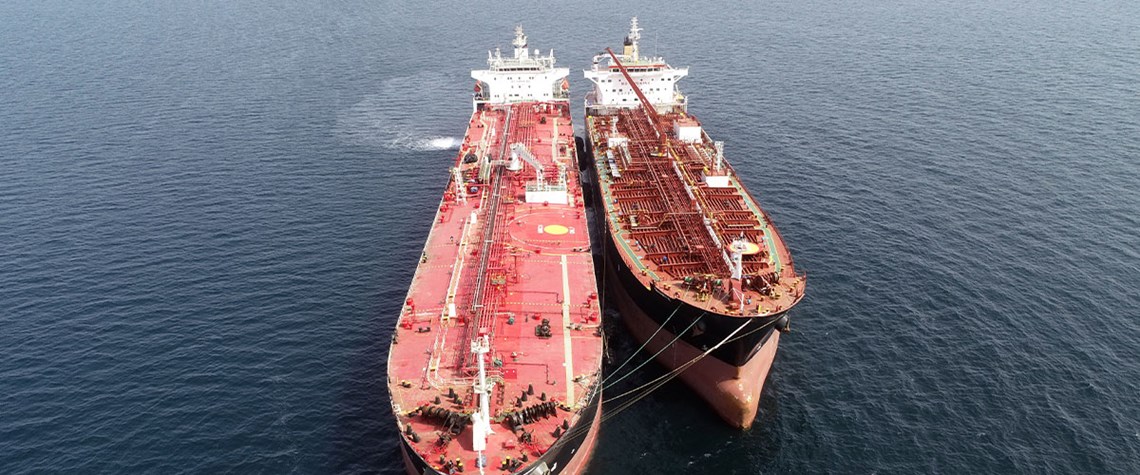
A number of tankers are engaging in ship-to-ship transfers of Russian crude in the Atlantic
Russia Iran Oil markets Sanctions
Simon Ferrie
13 September 2022
Follow @PetroleumEcon
Forward article link
Share PDF with colleagues

Russian barrels continue to impact Iranian trade

The sanctioned countries are competing in a limited illicit market

Iranian crude and condensate exports have slowed this year amid stiff competition from sanctioned Russian barrels for both Chinese market share and access to those tankers willing to transport the illicit cargoes. Iran exported an average of 880,000bl/d in the second quarter, down from 980,000bl/d in the first three months of the year, according to data from cargo-tracking analytics firm Vortexa. Exports have declined in recent months, but logged a partial rebound in August to back up to more than 800,000bl/d. China remains the largest single buyer of Iranian crude, but the Middle Eastern country has seen its market share eroded by Russia. China imported an average of 500,000bl/d of crude fr

Also in this section
Letter from the US: This crisis Is different
Opinion
28 April 2026
Oil traders warning of $200/bl oil are wrong, and the market should be wary of proclamations that the impact of the oil shortage has only begun to be felt and a that a ‘harsh adjustment’ is coming—even for industrialised nations
Middle East oil’s multi-step recovery plan
28 April 2026
Restoring supply from Saudi Arabia, the UAE, Kuwait, Qatar, Bahrain and Iraq involves complexities far beyond simply adjusting operational controls
Decoding datacentre energy demand
28 April 2026
Datacentres will guzzle power at a ferocious rate, but the impact on wider energy markets will be far more complex than previously thought
Iraq’s pipeline dilemma
28 April 2026
The key energy player faces balancing regional routes, political complexities, and creating a clear strategic vision for energy security

Share PDF with colleagues

COPYRIGHT NOTICE: PDF sharing is permitted internally for Petroleum Economist Gold Members only. Usage of this PDF is restricted by <%= If(IsLoggedIn, User.CompanyName, "")%>’s agreement with Petroleum Economist – exceeding the terms of your licence by forwarding outside of the company or placing on any external network is considered a breach of copyright. Such instances are punishable by fines of up to US$1,500 per infringement
Send

Forward article Link

Send
Sign Up For Our Newsletter
Project Data
Maps
Podcasts
Social Links
Featured Video
Home
  • About us
  • Subscribe
  • Reaching your audience
  • PE Store
  • Terms and conditions
  • Contact us
  • Privacy statement
  • Cookies
  • Sitemap
All material subject to strictly enforced copyright laws © 2025 The Petroleum Economist Ltd
Cookie Settings
;

Search
