


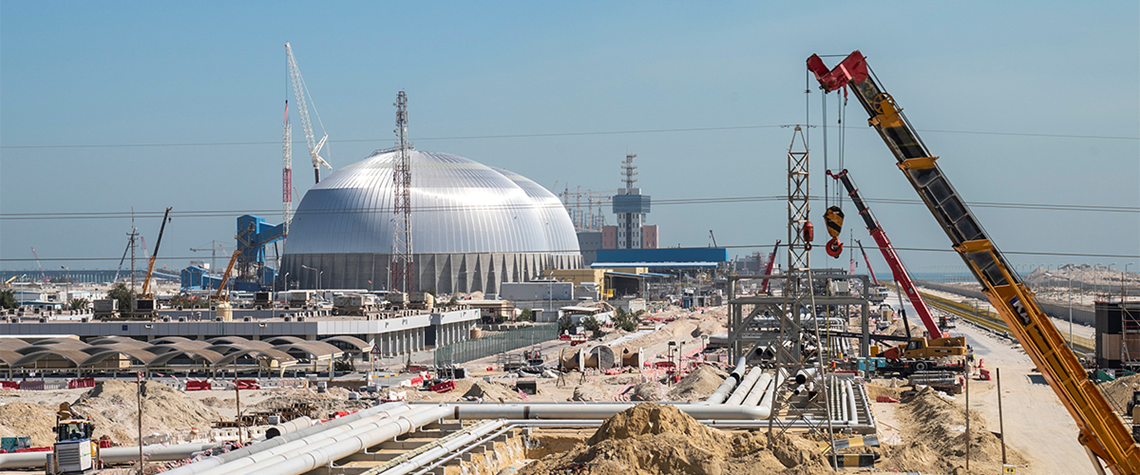
Construction at Kuwait’s Al Zour refinery in 2020
Refining Report: Major projects under way in Middle East
Countries in the region are expanding plants and building grassroots facilities, with countries in Africa keen to cut their fuel import bills
The Middle East is forecast to add approximately 1.6m b/d of new distillation capacity between 2022 and 2027, according to OPEC. Around 38% of this new capacity is attributed to the startup of Kuwait’s 615,000b/d Al Zour refinery, the region’s largest refining complex. However, several Middle Eastern countries are also investing in new capacity through facility expansions and/or grassroots facilities. These projects not only include increasing distillation capacity but also boosting secondary unit capacity by 3m b/d by 2028. Most secondary unit capacity additions (more than 2m b/d) will be in new desulphurisation units to produce high-quality, ultra-low-sulphur (ULS) fuels for both domestic

Also in this section
13 March 2026
Brussels is again weighing a cap on gas prices amid the Hormuz crisis, but the measure could backfire by deterring the LNG cargoes Europe urgently needs
12 March 2026
Emergency oil stocks provide a last line of defence to oil market shocks, so the IEA’s unprecedented 400m bl release represents something of a double-edged sword
12 March 2026
LPG could rapidly expand access to clean cooking across Africa and prevent hundreds of thousands of deaths from indoor air pollution each year, but infrastructure shortages and regulatory barriers are slowing investment and market growth
11 March 2026
Missiles over Dubai and disruption in Hormuz are testing the emirate’s reputation—and shaking the energy hub at the centre of the Gulf economy


