


Newsletters | Request Trial | Log in | Advertise | Digital Issue   |   Search
  • Upstream
  • Midstream & Downstream
  • Gas & LNG
  • Trading & Markets
  • Corporate & Finance
  • Geopolitics
  • Podcasts
Search
Related Articles
Letter from the US: This crisis Is different
Oil traders warning of $200/bl oil are wrong, and the market should be wary of proclamations that the impact of the oil shortage has only begun to be felt and a that a ‘harsh adjustment’ is coming—even for industrialised nations
Middle East oil’s multi-step recovery plan
Restoring supply from Saudi Arabia, the UAE, Kuwait, Qatar, Bahrain and Iraq involves complexities far beyond simply adjusting operational controls
Canada’s oil and gas looks East
There is a clear push to bolster exports to Asia amid uncertainty around its North American neighbour, but there are limits to the benefits from the energy crisis
OPEC+ caught between a crisis and a surplus
After overcoming a COVID-induced demand collapse with several years of successful market management, geopolitical events have conspired to provide the pact’s biggest test to date
Letter from Iran: Nuclear miscalculation
The regime’s policy of using nuclear ambiguity as a deterrent may have failed but it has realised it has other cards to play, while its neighbours are reappraising their approach to security
Mideast plans big spending on gas to meet demand
The region’s gas producers are investing heavily in the fuel in order to satisfy burgeoning demand resulting from economic growth and a shift to cleaner fuels
The illusion of supply: Rethinking energy security when oil cannot move
Demand for oil is falling because supply cannot meet it, not because it is no longer required
OPEC+’s 11m b/d March production collapse
Petroleum Economist analysis highlights sharp shift from crude oversupply to market deficit, with Iraq and Kuwait badly affected and key producers Saudi Arabia and the UAE also seeing output sharply lower
The demand destruction timebomb
It is not a case of if or when, but the length and magnitude of economic damage from elevated oil prices
Lessons from the crisis
The US-Iran conflict demonstrates the need for diversification in several senses of the word. It also exposes the limits of Washington applying pressure on major oil and gas producers it considers geopolitical adversaries
Both have much to lose if energy infrastructure is damaged
Saudi Arabia Iran Markets
Victor Kotsev
24 March 2023
Follow @PetroleumEcon
Forward article link
Share PDF with colleagues

Saudi-Iran deal first step to boosting regional oil security prospects

But there is less optimism on additional Iranian exports, and many near-term risks remain

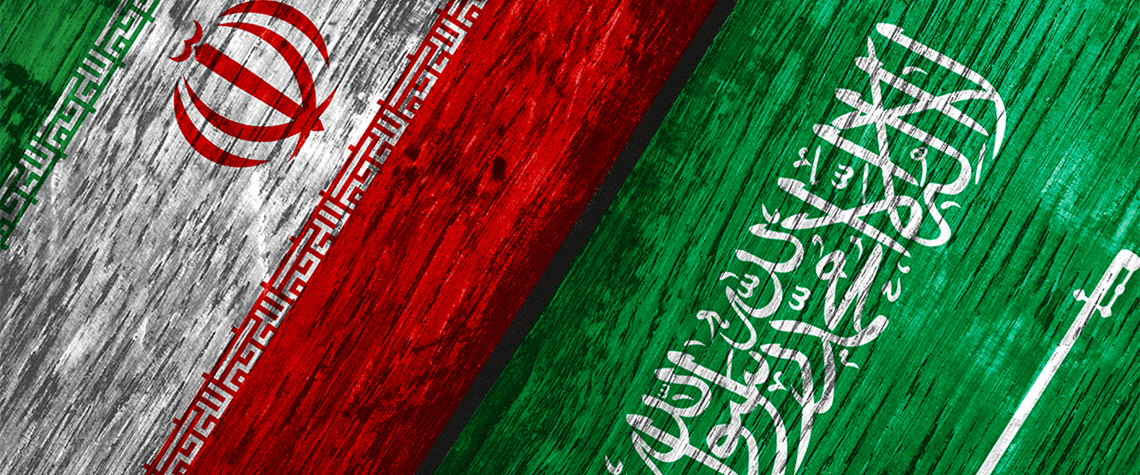
The Chinese-brokered deal to restore relations between Saudi Arabia and Iran may not necessarily prevent regional conflict or unlock additional Iran crude, but analysts believe it improves the long-term security of Saudi oil installations. The move will certainly be remembered as Beijing’s first big breakthrough on the Middle Eastern diplomatic scene. But is also an attempt to safeguard its oil purchases, given that it buys a lot of crude from both Saudi Arabia and Iran—even if much of the volume from the latter is not included in official statistics due to sanctions relating to Tehran’s alleged nuclear weapons programme. As a result, much of Iran’s crude trade takes place on the grey market

Also in this section
Letter from the US: This crisis Is different
Opinion
28 April 2026
Oil traders warning of $200/bl oil are wrong, and the market should be wary of proclamations that the impact of the oil shortage has only begun to be felt and a that a ‘harsh adjustment’ is coming—even for industrialised nations
Middle East oil’s multi-step recovery plan
28 April 2026
Restoring supply from Saudi Arabia, the UAE, Kuwait, Qatar, Bahrain and Iraq involves complexities far beyond simply adjusting operational controls
Decoding datacentre energy demand
28 April 2026
Datacentres will guzzle power at a ferocious rate, but the impact on wider energy markets will be far more complex than previously thought
Iraq’s pipeline dilemma
28 April 2026
The key energy player faces balancing regional routes, political complexities, and creating a clear strategic vision for energy security

Share PDF with colleagues

COPYRIGHT NOTICE: PDF sharing is permitted internally for Petroleum Economist Gold Members only. Usage of this PDF is restricted by <%= If(IsLoggedIn, User.CompanyName, "")%>’s agreement with Petroleum Economist – exceeding the terms of your licence by forwarding outside of the company or placing on any external network is considered a breach of copyright. Such instances are punishable by fines of up to US$1,500 per infringement
Send

Forward article Link

Send
Sign Up For Our Newsletter
Project Data
Maps
Podcasts
Social Links
Featured Video
Home
  • About us
  • Subscribe
  • Reaching your audience
  • PE Store
  • Terms and conditions
  • Contact us
  • Privacy statement
  • Cookies
  • Sitemap
All material subject to strictly enforced copyright laws © 2025 The Petroleum Economist Ltd
Cookie Settings
;

Search
