


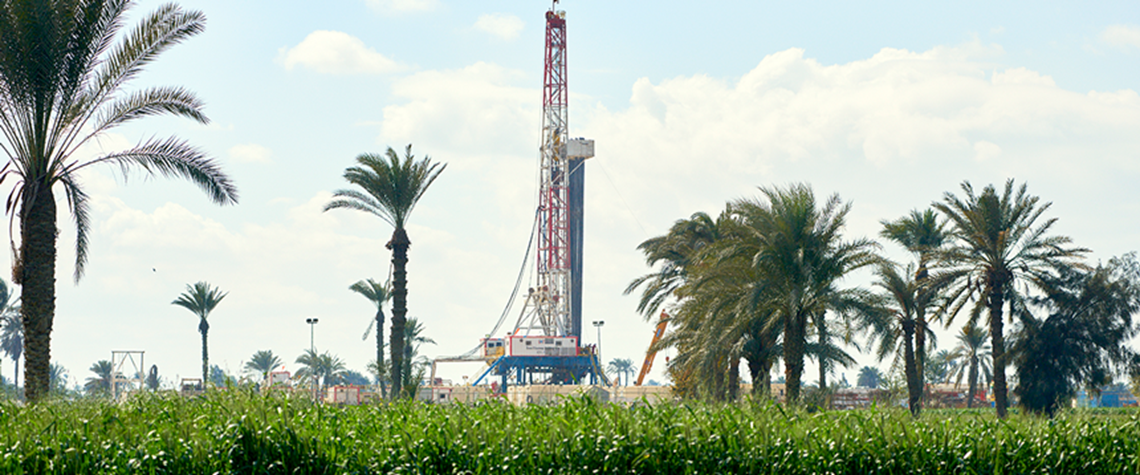
Pharos' operations in Egypt
Pharos benefits from Egypt’s flexibility
The firm’s onshore Western Desert asset allows for rapid optimisation based on the macroeconomic environment
The Covid-driven oil price crash in 2020 could hardly have come at a worse time for the Egyptian business of London-listed Pharos Energy. “We had really only just started to see the benefits flowing through from the drilling that we started when we first acquired [the El-Fayum asset] in the middle of 2019—the production levels were double where they stood when we bought it,” CEO Jann Brown tells Petroleum Economist. “If you think back to March 2020, nobody knew how low it could go, how long would it last,” she continues of that period of deep uncertainty for the industry. “Capitalising on flexibility—the ability to ramp up or down production and activity depending on price and access to liq

Also in this section
5 March 2026
Gas is a central pillar of Colombia’s energy system, but declining production poses a significant challenge, and LNG will be increasingly needed as a stopgap. A recent major offshore gas discovery offers hope, but policy improvements are also required, Camilo Morales, secretary general of Naturgas, the Colombian gas association, tells Petroleum Economist
4 March 2026
The continent’s inventories were already depleted before conflict erupted in the Middle East, causing prices to spike ahead of the crucial summer refilling season
4 March 2026
The US president has repeatedly promised to lower gasoline prices, but this ambition conflicts with his parallel aim to increase drilling and could be upended by his war against Iran
4 March 2026
With the Strait of Hormuz effectively closed following US-Israel strikes and Iran’s retaliatory escalation, Fujairah has become the region’s critical pressure release valve—and is now under serious threat


