


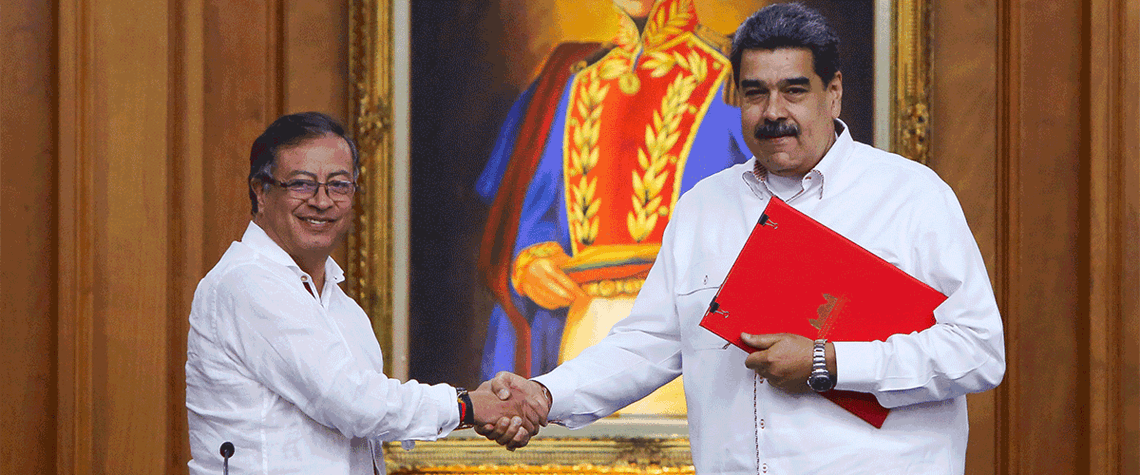
Venezuelan President Nicolas Maduro and Colombian President Gustavo Petro at the Miraflores Palace in Caracas, November 2022
Colombia’s upstream set for decline
Political decision-making casts doubt on the Latin American country’s ability to sustain energy self-sufficiency in the long term
The Colombian government’s decision to shut the door on new exploration contracts at the start of President Gustavo Petro’s tenure is set to impact domestic oil and gas production in 2024, as well as test the country’s long-term energy security and ability to plug lost fiscal revenues. Ending Colombia’s reliance on hydrocarbons exports has been at the centre of Petro‘s policymaking since taking office and reflects a strategic shift in favour of the energy transition, influenced by global trends and environmental concerns. “A complete transition away from fossil fuels seems unlikely during [Petro’s] presidency” Hiornes, Dragonfly “[Petro] appears intent on building his image as a glo

Also in this section
28 April 2026
Oil traders warning of $200/bl oil are wrong, and the market should be wary of proclamations that the impact of the oil shortage has only begun to be felt and a that a ‘harsh adjustment’ is coming—even for industrialised nations
28 April 2026
Restoring supply from Saudi Arabia, the UAE, Kuwait, Qatar, Bahrain and Iraq involves complexities far beyond simply adjusting operational controls
28 April 2026
Datacentres will guzzle power at a ferocious rate, but the impact on wider energy markets will be far more complex than previously thought
28 April 2026
The key energy player faces balancing regional routes, political complexities, and creating a clear strategic vision for energy security


