Newsletters | Request Trial | Log in | Advertise | Digital Issue   |   Search
  • CCUS
  • Cap & Trade Markets
  • Voluntary Markets & Offsets
  • Corporate & Finance
  • Net Zero Strategies
  • Podcasts
Search
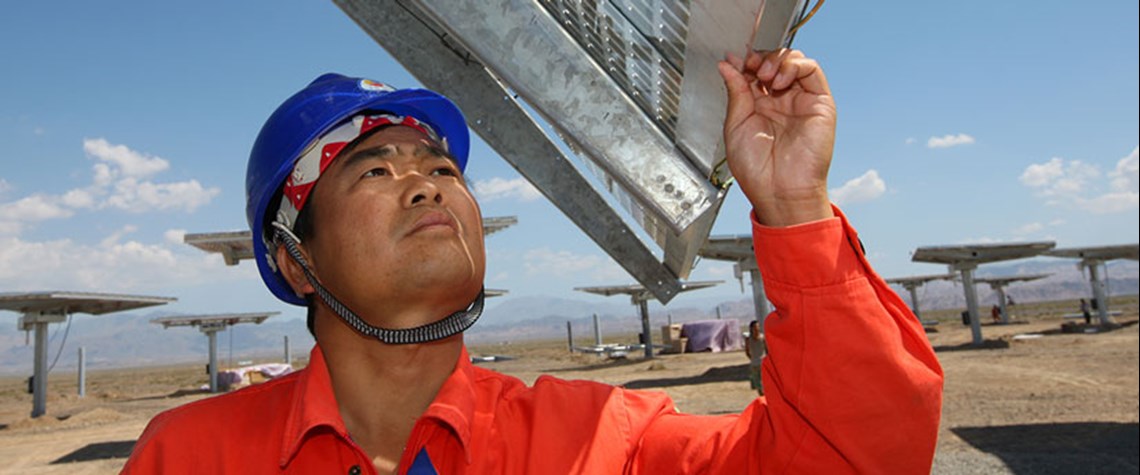
A worker inspects solar panels in Xinjiang
US China Solar
Gregor Macdonald
11 August 2021
Follow @PetroleumEcon
Forward article link
Share PDF with colleagues

Biden under pressure over cheap Chinese solar

Scrutiny on manufacturing in Xinjiang could open the door to polysilicon production in other regions as demand surges

Pressure is mounting on the Biden administration to extend protective solar tariffs originally put in place during the Trump presidency and which are due to expire in early 2022. The formal request by two US-based solar manufacturers comes as focus intensifies on the polysilicon output of China’s Xinjiang region, and the factors that allow it to enjoy world-beating production costs. The Section 201 measures provide for an 18pc tariff on imported cells and modules, and were initially sought by Suniva and Auxin Solar earlier this month. But they have been joined quickly by Hanwha Q Cells, LG Electronics USA and Mission Solar Energy. The petitions, made to the US International Trade Commission,

Also in this section

Share PDF with colleagues

COPYRIGHT NOTICE: PDF sharing is permitted internally for Petroleum Economist Gold Members only. Usage of this PDF is restricted by <%= If(IsLoggedIn, User.CompanyName, "")%>’s agreement with Petroleum Economist – exceeding the terms of your licence by forwarding outside of the company or placing on any external network is considered a breach of copyright. Such instances are punishable by fines of up to US$1,500 per infringement
Send

Forward article Link

Send
Sign Up For Our Newsletter
Project Data
Maps
Podcasts
Social Links
Featured Video
Home
  • About us
  • Subscribe
  • Reaching your audience
  • PE Store
  • Terms and conditions
  • Contact us
  • Privacy statement
  • Cookies
  • Sitemap
All material subject to strictly enforced copyright laws © 2025 The Petroleum Economist Ltd
Cookie Settings
;

Search