


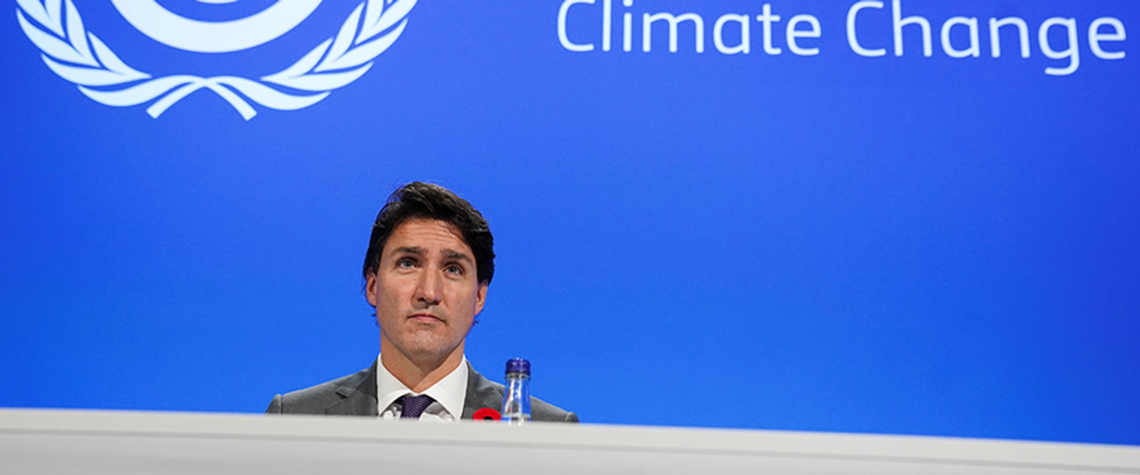
Canadian prime minister Justin Trudeau at Cop26
Letter from Canada: Emission caps threaten output
Canada’s lack of progress in meeting ambitious emission reduction goals is a particular threat to the country’s upstream oil and gas sector
Canadian prime minister Justin Trudeau’s government has increased its national greenhouse gas emission reduction target for 2030 to between 40pc and 45pc of 2005 levels, up from 30pc previously. But the country managed to cut emissions by a mere 9mn t CO₂ equivalent, or 1pc, through 2019, based on its latest submission to the UN Framework Convention on Climate Change. Assuming the federal government stands firm on its national target, the biggest loser could be the country’s oil and gas sector. Its emissions have increased by a fifth, to 191mn t, since 2005—on the back of a near two-and-a-half times jump in emissions from the oil sands, despite a significant improvement in emissions intensit

Also in this section
13 March 2026
Brussels is again weighing a cap on gas prices amid the Hormuz crisis, but the measure could backfire by deterring the LNG cargoes Europe urgently needs
12 March 2026
Emergency oil stocks provide a last line of defence to oil market shocks, so the IEA’s unprecedented 400m bl release represents something of a double-edged sword
12 March 2026
LPG could rapidly expand access to clean cooking across Africa and prevent hundreds of thousands of deaths from indoor air pollution each year, but infrastructure shortages and regulatory barriers are slowing investment and market growth
11 March 2026
Missiles over Dubai and disruption in Hormuz are testing the emirate’s reputation—and shaking the energy hub at the centre of the Gulf economy


