


Newsletters | Request Trial | Log in | Advertise | Digital Issue   |   Search
  • Upstream
  • Midstream & Downstream
  • Gas & LNG
  • Trading & Markets
  • Corporate & Finance
  • Geopolitics
  • Podcasts
Search
Related Articles
US continues gas infrastructure buildout
The US has used booming shale production to massively expand its LNG infrastructure, but Canadian developments have not fare so well while in South America consumption outstrips production
In pipelines we trust
The addition of an oil pipeline to the Power of Siberia 2 gas project could ensure deliveries of Russian oil to China, materially shorten logistics lines between West Siberia and final customers, and—amid disruption in the Strait of Hormuz—offer a land-based export route that reduces exposure to maritime chokepoints
Drone power: Ukraine escalates its war on Russian oil
Sustained strikes on ports, terminals and refineries are testing the resilience of Russia’s oil export system, yet rapid repairs, rerouting and surging prices mean the campaign has yet to deliver a decisive blow
Mideast plans big spending on gas to meet demand
The region’s gas producers are investing heavily in the fuel in order to satisfy burgeoning demand resulting from economic growth and a shift to cleaner fuels
Qatar’s Golden Pass dilemma
Golden Pass’s startup offers QatarEnergy a timely boost but may also force a difficult choice between honouring disrupted contracts and capitalising on soaring spot LNG prices
Lessons from the crisis
The US-Iran conflict demonstrates the need for diversification in several senses of the word. It also exposes the limits of Washington applying pressure on major oil and gas producers it considers geopolitical adversaries
Letter from the US: The oil market abyss
The overlooked oil supply issue is that even after the Strait of Hormuz opens, barrels won’t readily return
How Russia gains from the Hormuz supply shock
The US may be systemically stripping Russia of key geopolitical allies, but Moscow can reap rewards from the Hormuz crisis, both in the short and long term
Hormuz crisis delivers tailwinds for US LNG
Disruptions to Qatari LNG exports have highlighted the risks of concentrated supply, potentially strengthening the long-term position of US exporters despite limited near-term flexibility
Letter from Dubai: A safe haven under fire
Missiles over Dubai and disruption in Hormuz are testing the emirate’s reputation—and shaking the energy hub at the centre of the Gulf economy
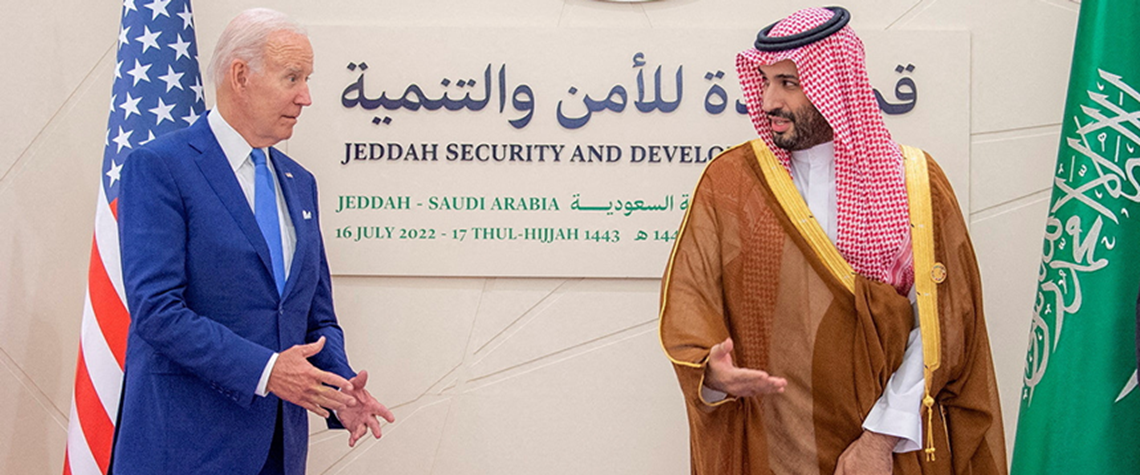
President Biden (left) with Crown Prince Mohammed bin Salman on his trip to Saudi Arabia
Opinion
Opec Russia Saudi Arabia UAE US
Robin M Mills
Dubai
9 August 2022
Follow @PetroleumEcon
Forward article link
Share PDF with colleagues

Letter from the Middle East: Opec balances Russia and the West

The cartel is happy to wait for further developments before committing to more drastic action

US president Joe Biden seems to have come away from his first diplomatic visit to Saudi Arabia in July empty-handed, with the Opec+ alliance in early August swiftly deciding on only a small rise in output targets from September. But the current US administration should not have expected anything different. The announced production increase by Opec+ of 100,000bl/d is so small it seems cosmetic at best and insulting at worst. And the situation is exacerbated by the fact that supply constraints mean the actual physical increment will be more like 50,000-60,000bl/d—even assuming Saudi Arabia, the UAE and Iraq make full use of their extra allowances. In contrast, a briefing by the US’s Middle Eas

Also in this section
Letter from the US: This crisis Is different
Opinion
28 April 2026
Oil traders warning of $200/bl oil are wrong, and the market should be wary of proclamations that the impact of the oil shortage has only begun to be felt and a that a ‘harsh adjustment’ is coming—even for industrialised nations
Middle East oil’s multi-step recovery plan
28 April 2026
Restoring supply from Saudi Arabia, the UAE, Kuwait, Qatar, Bahrain and Iraq involves complexities far beyond simply adjusting operational controls
Decoding datacentre energy demand
28 April 2026
Datacentres will guzzle power at a ferocious rate, but the impact on wider energy markets will be far more complex than previously thought
Iraq’s pipeline dilemma
28 April 2026
The key energy player faces balancing regional routes, political complexities, and creating a clear strategic vision for energy security

Share PDF with colleagues

COPYRIGHT NOTICE: PDF sharing is permitted internally for Petroleum Economist Gold Members only. Usage of this PDF is restricted by <%= If(IsLoggedIn, User.CompanyName, "")%>’s agreement with Petroleum Economist – exceeding the terms of your licence by forwarding outside of the company or placing on any external network is considered a breach of copyright. Such instances are punishable by fines of up to US$1,500 per infringement
Send

Forward article Link

Send
Sign Up For Our Newsletter
Project Data
Maps
Podcasts
Social Links
Featured Video
Home
  • About us
  • Subscribe
  • Reaching your audience
  • PE Store
  • Terms and conditions
  • Contact us
  • Privacy statement
  • Cookies
  • Sitemap
All material subject to strictly enforced copyright laws © 2025 The Petroleum Economist Ltd
Cookie Settings
;

Search
