


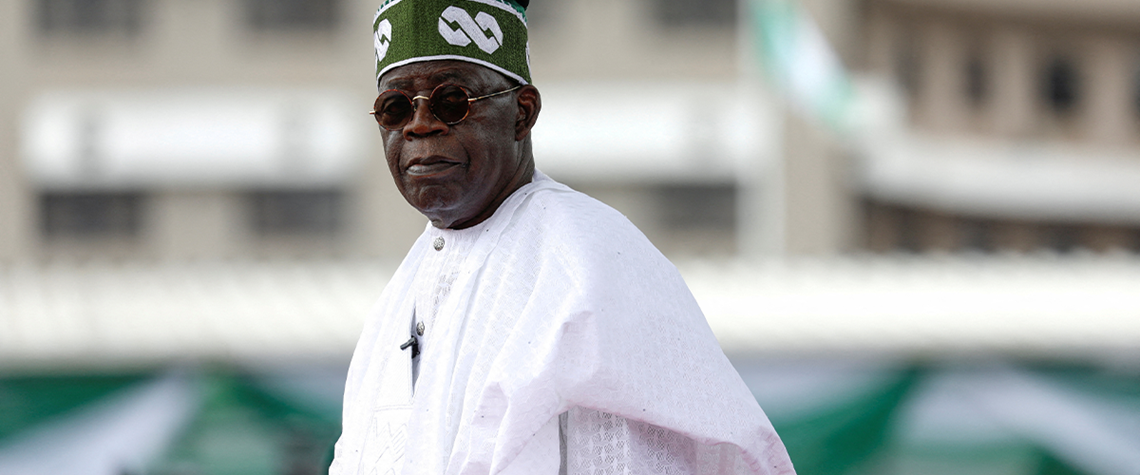
Nigerian president Bola Tinubu
Letter from Nigeria: New leader delivers shock therapy
President Tinubu has already targeted major reforms at the country’s dysfunctional downstream and upstream sectors, as well as overhauling monetary policy
Nigerians had low expectations of their new president, Bola Tinubu, who was elected with a record-low 36.61% of the vote in February. As co-founder of the All Progressives Congress party, which brought his predecessor Muhammadu Buhari to power in 2015, Tinubu was regarded as a continuity candidate, unlikely to deliver much-needed reform after eight years of sclerotic Buhari rule. However, Tinubu has made an immediate impact on Nigeria’s political economy, breaking the inertia that characterised Buhari’s tenure and upending the entire petroleum sector—starting with the downstream. Subsidy elimination Tinubu used his inauguration speech in May to end a nearly 50-year-old fuel subsidy. This had

Also in this section
29 April 2026
The UAE’s exit from the alliance marks a decisive step towards a world in which oil markets are shaped less by collective management and more by national strategy
29 April 2026
Trafigura’s $1b prepayment agreement confirms African resource holders’ renewed interest in oil-backed financing deals as they look to capitalise on high oil prices
29 April 2026
The UAE’s departure from the oil producers’ group was a surprise to many, but the move can be traced back to a single point five years ago
28 April 2026
Oil traders warning of $200/bl oil are wrong, and the market should be wary of proclamations that the impact of the oil shortage has only begun to be felt and a that a ‘harsh adjustment’ is coming—even for industrialised nations


