


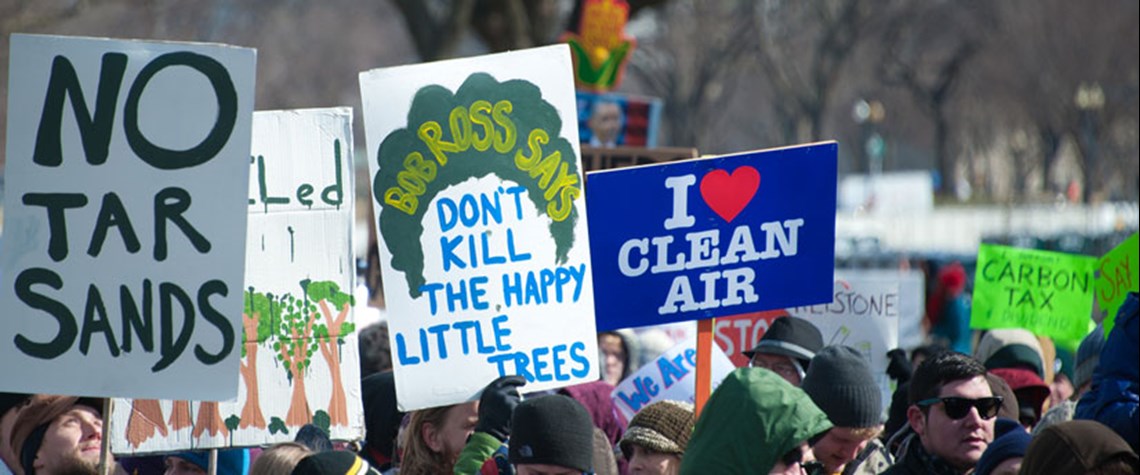
A climate rally in Washington, DC
Letter from Canada: Net zero poses existential threat to oil sands
Oil sands producers will need to make drastic changes if they are going to survive the next few decades
One would not need to be a rocket scientist to know that decarbonisation of the global energy mix is bad news for Canada’s oil sands industry. There has been an exodus of foreign oil companies from the resource since the 2014-16 oil price crash, while some remaining actors have taken large write-downs on their oil sands holdings in the past year or so as the climate change movement has picked up steam. But it was not until the release of the IEA’s Net Zero by 2050: A Roadmap for the Global Energy Sector report in mid-May, with its net-zero emissions (NZE) scenario—possibly the definitive one for meeting the Paris Agreement’s stretch goal of limiting the rise in global temperatures to 1.5°C—t

Also in this section
13 March 2026
Brussels is again weighing a cap on gas prices amid the Hormuz crisis, but the measure could backfire by deterring the LNG cargoes Europe urgently needs
12 March 2026
Emergency oil stocks provide a last line of defence to oil market shocks, so the IEA’s unprecedented 400m bl release represents something of a double-edged sword
12 March 2026
LPG could rapidly expand access to clean cooking across Africa and prevent hundreds of thousands of deaths from indoor air pollution each year, but infrastructure shortages and regulatory barriers are slowing investment and market growth
11 March 2026
Missiles over Dubai and disruption in Hormuz are testing the emirate’s reputation—and shaking the energy hub at the centre of the Gulf economy


