


Newsletters | Request Trial | Log in | Advertise | Digital Issue   |   Search
  • Upstream
  • Midstream & Downstream
  • Gas & LNG
  • Trading & Markets
  • Corporate & Finance
  • Geopolitics
  • Podcasts
Search
Related Articles
Canada’s oil and gas looks East
There is a clear push to bolster exports to Asia amid uncertainty around its North American neighbour, but there are limits to the benefits from the energy crisis
OPEC+ caught between a crisis and a surplus
After overcoming a COVID-induced demand collapse with several years of successful market management, geopolitical events have conspired to provide the pact’s biggest test to date
The illusion of supply: Rethinking energy security when oil cannot move
Demand for oil is falling because supply cannot meet it, not because it is no longer required
OPEC+’s 11m b/d March production collapse
Petroleum Economist analysis highlights sharp shift from crude oversupply to market deficit, with Iraq and Kuwait badly affected and key producers Saudi Arabia and the UAE also seeing output sharply lower
The demand destruction timebomb
It is not a case of if or when, but the length and magnitude of economic damage from elevated oil prices
Lessons from the crisis
The US-Iran conflict demonstrates the need for diversification in several senses of the word. It also exposes the limits of Washington applying pressure on major oil and gas producers it considers geopolitical adversaries
Letter from the US: The oil market abyss
The overlooked oil supply issue is that even after the Strait of Hormuz opens, barrels won’t readily return
Middle East chaos creates new oil and gas trends
A complex and sometimes contradictory web of factors that include unpredictable oil prices, the globalisation of LNG markets, the expansion of Middle Eastern sovereign capital and the growth of datacentre demand will shape the energy landscape beyond 2026
The key arteries of the energy world
The Strait of Hormuz crisis highlights how key waterways can become global chokepoints
Through the oil looking glass
The extent of the US-Israel war with Iran means there will be no going back to the previous market equilibrium no matter how the conflict ends
There are big differences in the views of the IEA and OPEC to 2028
Markets
Neil Atkinson
6 November 2023
Follow @PetroleumEcon
Forward article link
Share PDF with colleagues

IEA and OPEC diverge on oil outlook

There is a gulf between the two bodies when it comes to their medium-term forecasts

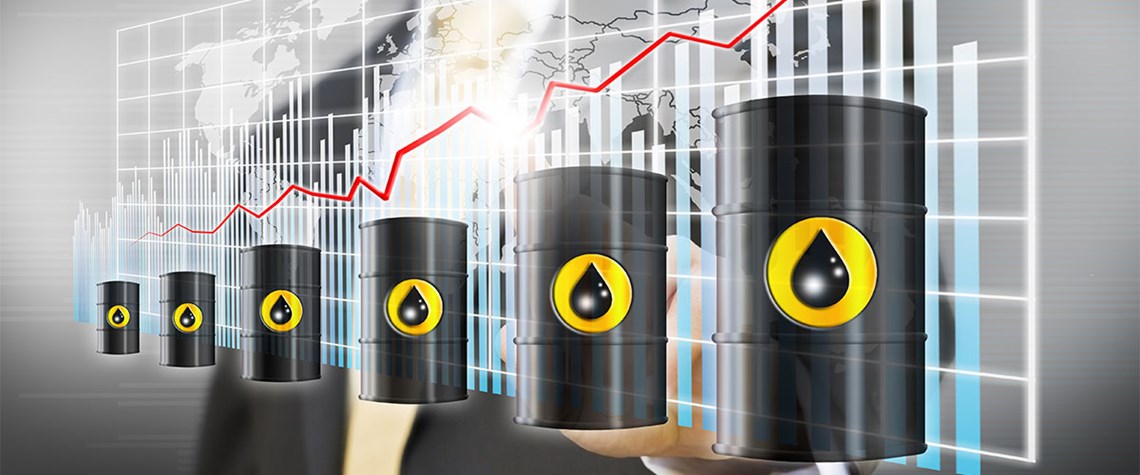
The IEA and OPEC have each published medium-term oil market outlooks in the past few months. The IEA’s goes to 2028, but OPEC’s is braver in forecasting the market to 2045. There are big differences in the views of the two bodies to 2028, which is remarkable considering it is only a five-year period. However, given their different perspectives on the pace of the energy transition, it is perhaps less surprising. There are big differences in terms of the outlooks for non-OPEC supply. The OPEC Secretariat is much more bullish, seeing supply increasing by 6.98m b/d from 2022 to 2028, compared with the IEA’s much smaller growth of 3.96m b/d. Looking at the data on a country-by-country basis, the

Also in this section
Iraq’s pipeline dilemma
28 April 2026
The key energy player faces balancing regional routes, political complexities, and creating a clear strategic vision for energy security
The EU’s electric dreams
24 April 2026
The European Commission’s response to the Middle East crisis is to double down on its transition strategy, with plans for a new target on electrification
Eni and BP score big in Egypt
24 April 2026
A major new discovery by Eni and BP that can likely be fast-tracked to production is welcome news for Egypt as it scrambles to plug a widening supply gap and deal with rising import risks
Coal-to-gas switch drives Asian demand
24 April 2026
Countries in the region are turning to the cleaner-burning fuel for power generation, driving demand for imports

Share PDF with colleagues

COPYRIGHT NOTICE: PDF sharing is permitted internally for Petroleum Economist Gold Members only. Usage of this PDF is restricted by <%= If(IsLoggedIn, User.CompanyName, "")%>’s agreement with Petroleum Economist – exceeding the terms of your licence by forwarding outside of the company or placing on any external network is considered a breach of copyright. Such instances are punishable by fines of up to US$1,500 per infringement
Send

Forward article Link

Send
Sign Up For Our Newsletter
Project Data
Maps
Podcasts
Social Links
Featured Video
Home
  • About us
  • Subscribe
  • Reaching your audience
  • PE Store
  • Terms and conditions
  • Contact us
  • Privacy statement
  • Cookies
  • Sitemap
All material subject to strictly enforced copyright laws © 2025 The Petroleum Economist Ltd
Cookie Settings
;

Search
